

Many people with learning disabilities have their own way of communicating and / or eating and drinking.
They do well with the understanding and support of their family and carers.
At times, some people may have problems that lead to distress, or less choice and participation.
Our service can support them and their family / carers.
Who do we support?
We see people who
- have a learning disability and
- communication or swallowing difficulty and
- are over 18 years of age and
- have a registered GP in Northumberland or North Tyneside.
Communication
Many people with a learning disability have their own way of communicating.
It helps if everyone knows the best way to support someone.
You can use our communication summary to write down how someone communicates and how they need people to communicate with them.
You can share the communication summary with those who support the person e.g. carers, care manager, professionals.
We support people to overcome difficulties with:
- understanding other people
- making their needs and feelings known
- making choices
- taking part at home, work, social, education
- distress or behaviours due to communication breakdown
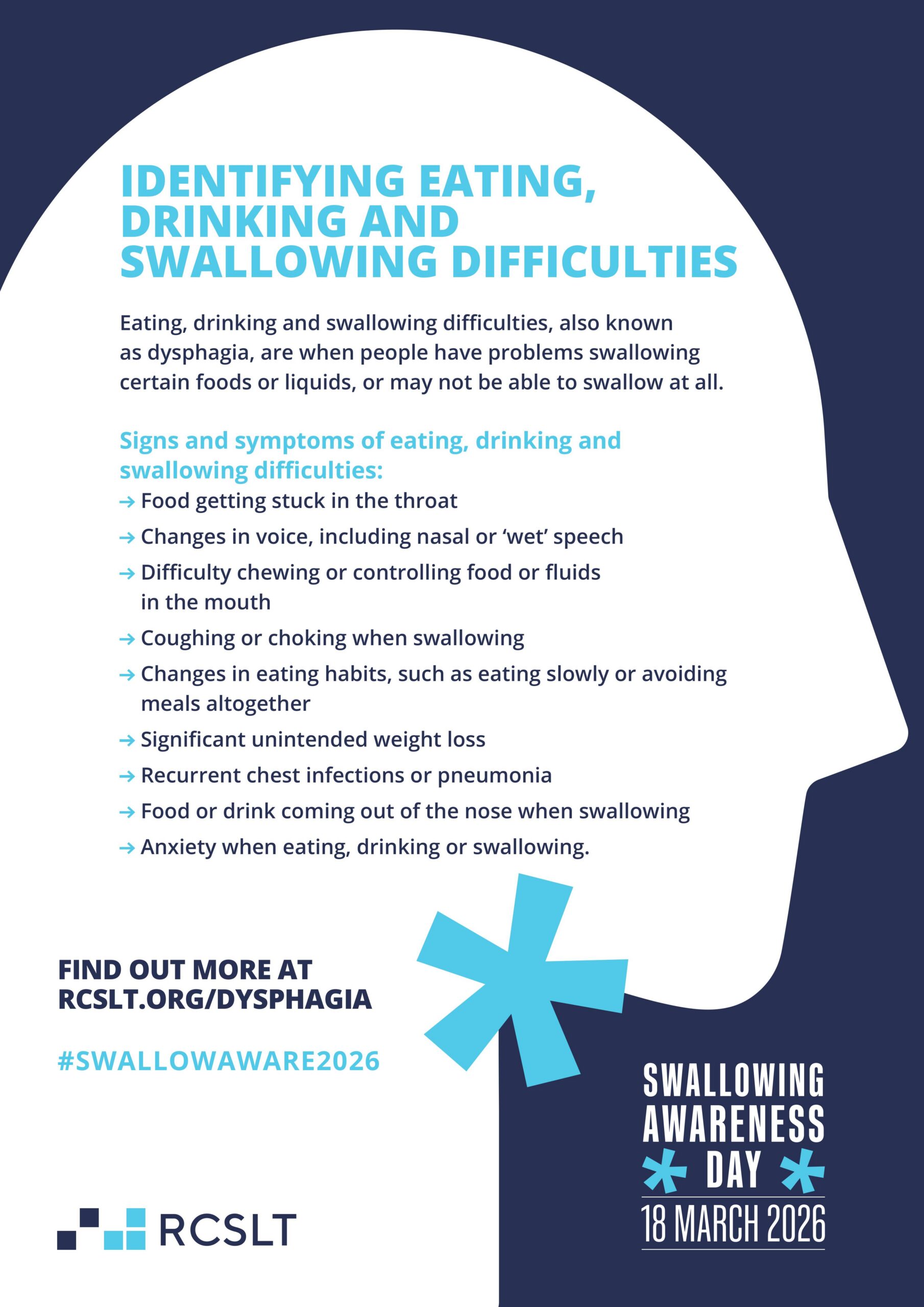
Swallowing (dysphagia)
Many people with a learning disability have their own way of eating or drinking.
It helps if everyone knows the best way to support someone.
You can use our eating and drinking summary to write this down.
You can share the eating and drinking summary with those who support the person e.g. carers, care manager, professionals.
We support people who:
- Are not eating or drinking enough due to swallow problems
- Have food or drink going into the lungs and leading to chest illness
- Have choked or might choke on food or drink
- Are distressed when eating or drinking e.g. due to coughing
- Have carers that are anxious about supporting their eating and drinking
We take referrals from people with learning disabilities and their family, carers and professionals.
We will talk to you, or people who support you, about the problems you are having.
We can see you at the best place for you e.g. home, day service, respite placement or in a clinic.
For communication, we might:
- Ask about your usual ways of communicating
- Ask how the problems are affecting you
- Ask what helps you
- Do some assessment with you. This could be showing you objects or pictures and asking you questions. We might watch you and your family/carers spending time together
- Help you and others to know about your difficulties, and what might help
- Write a Communication Passport. This says how you communicate and the help that you need from other people
- Help you and others to use different ways of communicating that work better
- Talk with carers and professionals who help you
For eating, drinking, swallowing, we might:
- Ask about when the problems started and what happens.
- Ask what you eat and drink on a normal day
- Watch you eat, drink, take medicine
- Read about your health
- Ask for a swallow x-ray (videofluoroscopy)
- Help you and others to know about your difficulties
- Explain what can help. This can be things like your position, surroundings, cup, food texture or how people help you
- Write Eating and Drinking Guidelines for the people who support you
- Help others to help you
- Talk about other ways of having food and drink e.g. a feeding tube
We may contact other specialist services:
- Other specialist SLTs
- Specialist dentistry
- Occupational therapy
- Physiotherapy
- Gastroenterology
- Neurology
- Positive behaviour support,
- Regional communication aid service
We will ask you to tell us how we can make our service better.
sltadultlearningdisability
0191 293 3049: Ask for someone from the learning disability team to call you back.
Services
Northumberland Community Learning Disability Team
Regional Communication Aid Service (RCAS)
Learning Disability organisations
Foundation for People with Learning Disabilities
British Institute of Learning Disabilities
Swallowing
Learning Disability Dysphagia Diamond Standards
IDDSI, International Dysphagia Diet Standardisation Initiative
Communication
Five Good Communication Standards
Regulator and professional body