

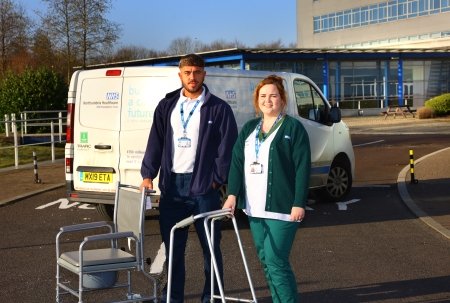
Allied Health Professionals (AHP) make up a key part of our workforce. They are healthcare staff who play a vital role in diagnosing, treating, and supporting patients.
There are fifteen allied health professions, of which we have eight distinct professions represented within our Trust who all share a common goal, playing a vital role in diagnosing, treating, rehabilitating, and improving patients’ lives.
Allied Health Professionals are all about helping people live healthier, more independent lives using specialist skills and they look after patients across the whole life span.
They work in various settings delivering patient care in hospitals, health centres, schools, rehabilitation settings and in the community in patient’s homes as part of multi-disciplinary teams.
These roles include:
Dietitians – who use their knowledge of food and nutrition to improve health, prevent disease, treat conditions, and boost sports performance.
Occupational therapists – who help patients to overcome or adapt to an illness, injury or disability, helping them to regain their independence in a number of ways and give advice or arrange special equipment or adaptions for the home.
Operating department practitioner – who are a highly skilled workforce, working in three specialist areas within operating theatres: anaesthetics, surgery and recovery.
Physiotherapists – who help people improve mobility and regain independence after injury, illness, ageing, or disability.
Podiatrists – who provide diagnosis and treatment for patients who have problems with their legs and feet or are experiencing painful foot conditions.
Radiography – who provide imaging using high tech equipment, combined with technical expertise and anatomical knowledge to help diagnose injury or disease. Working with patients of all ages and backgrounds.
Speech and language therapists – who provide life‑changing care and support for children and adults with communication, eating, drinking, and swallowing difficulties.
How do you become an Allied Health Professional?
Entry requirements for the AHPs vary, and acquiring the knowledge and skills to become a professional involves training and study at degree or diploma level, however there is a range of vital support roles that require no set academic qualifications.
Staff Stories