
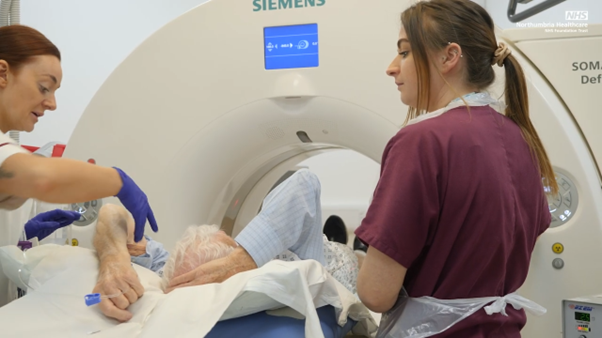
Radiographers play a vital role in patient care, using advanced imaging technology and specialist knowledge to help diagnose and monitor a wide range of conditions.
Working with patients of all ages and backgrounds, radiographers combine technical expertise, problem-solving skills and compassionate care to support patients throughout their healthcare journey.
Radiography is divided into two professions:
- Diagnostic Radiography – using imaging techniques such as X-ray, CT, MRI, Ultrasound and Mammography to diagnose injuries and diseases.
- Therapeutic Radiography – using radiation treatment, primarily to treat cancer and other conditions.
At Northumbria Healthcare, we provide diagnostic radiography services across our hospitals and community sites.
Find out more clinical radiology careers
A career in radiography offers the opportunity to:
- Make a direct difference to patient care.
- Work with innovative technology.
- Develop specialist clinical expertise.
- Be part of a multidisciplinary healthcare team.
- Access excellent career progression opportunities.
- Work in a rewarding profession where no two days are the same.
Whether you are starting your healthcare career or looking to develop into an advanced specialist role, radiography offers a dynamic, varied and fulfilling career with opportunities to make a real impact on patients' lives.
Radiography at Northumbria Healthcare
At our three general hospitals in Hexham, North Tyneside and Wansbeck we provide diagnostic imaging services including:
- X-ray
- CT
- Ultrasound
- MRI
- Fluoroscopy
- Mammography
Our radiographers work in outpatient departments, inpatient wards, urgent care services and operating theatres, supporting clinicians across many specialties.
We also provide imaging services at community hospitals in Northumberland and North Tyneside, including:
- Alnwick Community Hospital
- Berwick Infirmary
- Blyth Community Hospital
- Morpeth NHS Centre
These services enable patients to receive imaging closer to home.
At Northumbria Specialist Emergency Care Hospital, radiographers support emergency and critically ill patients, working within a fast-paced environment that includes emergency care, cardiac services and specialist procedures.
To become a diagnostic radiographer, you must complete an approved Diagnostic Radiography degree and register with the Health and Care Professions Council (HCPC).
Typical university entry requirements include:
- Around 120 UCAS points (or equivalent qualifications).
- At least one science-based A-Level or equivalent qualification.
- GCSE English Language and Mathematics at Grade 4/C or above.
Universities in the North East who offer courses include Teesside University and the University of Cumbria, alongside many other institutions across the UK.
Degree programmes usually take three years and include a combination of academic study and clinical placements, covering topics such as:
- Human anatomy and physiology
- Radiation physics and protection
- Imaging techniques
- Patient care and communication
- Research and evidence-based practice
Apprenticeships
We also offer apprenticeships providing opportunities for existing staff to progress into radiography careers while earning and learning.
Build your career with Northumbria
Most radiographers start as a band 5 and there is a wide range of opportunities to specialise and progress throughout your career with us.
Possible careers include:
- CT Radiographer
- Mammographer
- Sonographer (Ultrasound)
- Reporting Radiographer
- Education and Training Roles
- Service and Department Management
- Advanced Clinical Practice
- Consultant Radiographer Roles
At Northumbria Healthcare, radiographers are supported through ongoing training, education and professional development.
This includes:
- Radiographer-Led Discharge Programmes
- Advanced Clinical Practice Pathways
- Reporting Radiographer Roles
Staff stories