

If you are experiencing problems with your feet, there are many resources available to help you care for the issue at home.
Our podiatrists have created a series of exercise videos for common foot conditions. Click on the relevant condition below to view a YouTube playlist with helpful exercises and self-management advice.
You can find more information about common conditions on The Royal College of Podiatry's website.
Click the headings below to expand.
Plantar fasciopathy is one of the most common causes of heel pain. It happens when the thick band of tissue on the bottom of your foot becomes irritated and painful, usually where it attaches to the heel.
The pain is often worse when you take your first few steps in the morning or after sitting for a while. Although it can be stubborn, most people improve with simple treatments such as exercises, activity changes, and supportive footwear.
The below video is part of a playlist of nine videos. When the video ends, the next video in the playlist will play.
The exercises included in the above playlist are:
Mid-portion Achilles tendinopathy is a condition that affects the Achilles tendon, which connects your calf muscles to your heel. It usually causes pain, stiffness, or tenderness in the middle part of the tendon, often after walking, running, or other activities.
Symptoms can develop gradually and may be worse when starting activity or the day after exercise. Recovery can take time, but most people improve with the right exercises, activity changes, and a gradual return to normal activities.
The below video is part of a playlist of seven videos. When the video ends, the next video in the playlist will play.
The exercises included in the above playlist are:
Insertional Achilles tendinopathy affects the point where the Achilles tendon attaches to the heel bone. It can cause pain, stiffness, and tenderness at the back of the heel, especially when walking, climbing stairs, or being active.
Symptoms often develop over time and may be worse first thing in the morning or after exercise. With the right treatment, including exercises, activity changes, and supportive footwear, most people can reduce their pain and get back to their usual activities.
The below video is part of a playlist of five videos. When the video ends, the next video in the playlist will play.
The exercises included in the above playlist are:
Posterior tibialis tendon dysfunction is a condition that affects a tendon on the inside of the ankle that helps support the arch of your foot. When this tendon becomes weak or irritated, it can cause pain along the inside of the ankle and foot, and the arch may start to flatten over time.
Symptoms often come on gradually and may be worse with walking or standing for long periods. Early treatment, including exercises, supportive footwear, and activity changes, can help reduce pain and improve foot function.
The below video is part of a playlist of six videos. When the video ends, the next video in the playlist will play.
The exercises included in the above playlist are:
Extensor tendinopathy affects the tendons that run across the top of the foot and help lift the foot and toes. It can cause pain, tenderness, or swelling on the top of the foot, particularly when walking, running, or wearing tight footwear.
Symptoms often develop gradually and may feel worse during or after activity. Most people improve with a combination of exercises, activity changes, and footwear that reduces pressure on the top of the foot.
The below video is part of a playlist of five videos. When the video ends, the next video in the playlist will play.
The exercises included in the above playlist are:
Ankle instability is when the ankle feels weak, wobbly, or like it might give way. It often develops after one or more ankle sprains, especially if the ankle has not fully recovered.
People with ankle instability may experience repeated sprains, pain, swelling, or a feeling of unsteadiness when walking on uneven ground. Treatment usually focuses on improving strength, balance, and confidence in the ankle to help prevent future injuries.
The below video is part of a playlist of six videos. When the video ends, the next video in the playlist will play.
The exercises included in the above playlist are:
Peroneal tendinopathy affects the tendons that run along the outside of the ankle and foot. These tendons help support the foot and provide stability when walking, running, or changing direction. The condition can cause pain, tenderness, or swelling on the outside of the ankle.
Symptoms often develop gradually and may be worse during or after activity. Most people improve with a combination of exercises, activity changes, and supportive footwear to help reduce strain on the tendons.
The below video is part of a playlist of six videos. When the video ends, the next video in the playlist will play.
The exercises included in the above playlist are:
This playlist includes exercises that can help improve strength, mobility, balance, and flexibility in your feet and ankles. These exercises are often used to support recovery from a range of common foot and ankle conditions.
Not every exercise will be suitable for everyone, so choose the exercises recommended by your healthcare professional. Taking time to complete them regularly can help improve function, reduce discomfort, and support your return to everyday activities.
The below video is part of a playlist of three videos. When the video ends, the next video in the playlist will play.
For more information about self care, click the headings below.
If you need to find a podiatrist, click here to visit the NHS website.
How to cut toenails
- Only cut the free edge of the nail.
- Always follow the shape of the toe.
- The cut nail should be the same length at the tip of the toe.
- Hold the toe between the thumb and middle finger. Use the second finger to place in front of the clippers to prevent the nail from flying at you.
- If the nails are long, place a finger on the nail plate to stop the nail from lifting when cutting.
- Cut a small piece of nail at a time to prevent chipping or cracking the nail plate.
- Never cut down the side (sulci) of the nail. This can lead to infections or ingrowing toenails.
How to file toenails
- Everyone can and should have their toenails filed.
- For best results, always file the nail before you wash your feet, bathe or shower. Do this when the nails are dry.
- The aim is to maintain your nails at the same length. This will lessen the need to cut the toenails.
- Toenails should only be filed in one direction.
- File across the top of the toe. Do this by resting the file on the toenail and pushing it away from yourself. This ensures that the nails are kept to the same length as the toe.
- If the toenail grows thick, then file the nail over the top of the nail plate to help keep it level with the toe.
What is a pressure ulcer?
A pressure ulcer, sometimes called a pressure sore or bed sore, is an area of damage to the skin and underlying tissue caused by prolonged pressure on any part of the body.
What are the causes of a pressure ulcer?
Pressure ulcers are caused by sitting or lying in one position for too long without moving. This can also be aggravated by rubbing or dragging the skin across a surface. A pressure ulcer can develop in a very short time, as little as a few hours.
The following video will provide information relating to the causes of pressure damage and guidance to help prevent pressure damage.
Northumbria Healthcare has also produced a leaflet, advising how to prevent pressure ulcers leaflets. Click here to download it.
What is sepsis?
Sepsis is also known as blood poisoning. Sepsis is the body’s extreme reaction to infection.
If not treated immediately, sepsis can result in tissue damage, organ failure and death. Yet with early diagnosis, it can be treated with antibiotics.
A septic wound is a medical emergency requiring urgent medical attention.
Signs and symptoms
Signs and symptoms of sepsis present differently in each person. The UK Sepsis Trust has published the following adult guidance:
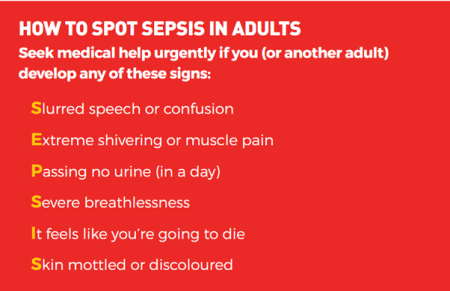
Further information from NHS England can be found below:
Emollients are moisturising treatments applied directly to the skin to soothe and hydrate it. They cover the skin with a protective film to trap moisture. They come in different forms:
- Lotions
- Sprays
- Creams
- Ointments
- Leave-on products
- Soap replacements
More advice about emollients can be found on the NHS website.