Publish date: 2 October 2026
Three NHS Trusts join forces to bring pioneering sleep apnoea treatment to the North East
A patient in the North East has become the first in the region to receive a pioneering implant that helps people with obstructive sleep apnoea (OSA) breathe normally while they sleep.
The landmark procedure has been made possible through a partnership between South Tyneside and Sunderland NHS Foundation Trust (STSFT), The Newcastle upon Tyne Hospitals NHS Foundation Trust and Northumbria Healthcare NHS Foundation Trust, bringing an innovative new treatment option to patients across the region.
The Inspire implant offers fresh hope for people living with OSA who are unable to tolerate conventional treatments. A multidisciplinary team of respiratory physicians, neurologists and surgeons from all three Trusts works together to assess patients and plan their care.
The first operation was carried out at Sunderland Royal Hospital on a patient from Newcastle. As the programme develops, there are plans to offer the surgery in Newcastle as well.
OSA causes a person's airway to repeatedly narrow or close during sleep, interrupting their breathing and often leaving them exhausted despite a full night's rest. Alongside daytime tiredness, poor concentration and memory problems, untreated OSA can increase the risk of serious health conditions including high blood pressure, heart disease and stroke.
Traditionally, OSA is treated with Continuous Positive Airway Pressure (CPAP). This uses a mask worn during sleep to keep the airway open. While CPAP works well for many people, some patients find it uncomfortable and they struggle to use it consistently.
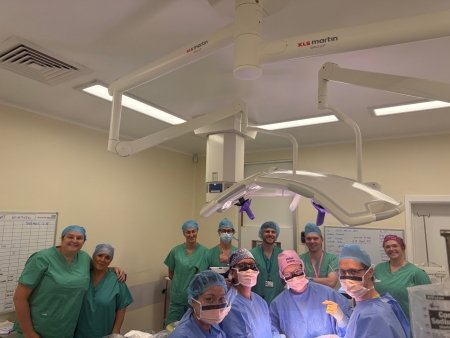
Miss Helen Cocks, South Tyneside and Sunderland NHS Foundation Trust’s clinical director for head and neck and consultant ear, nose and throat (ENT) surgeon, carried out the operation alongside fellow ENT consultants Miss Arpita Singh, from South Tyneside and Sunderland, and Mr Benjamin Cosway, from Newcastle Hospitals.
A photo above shows the team as they carried out the procedure.
On behalf of all three Trusts, Miss Cocks said:
"Completing our first Inspire procedure is an exciting milestone for all of us.
“Sleep apnoea can have a significant effect on a person's health, wellbeing and quality of life. Inspire provides another effective option for people who have been unable to make other treatment work for them.
“We hope this first patient, and many others, will benefit from this technology.
“This is also a fantastic example of how we have all collaborated to pool our expertise and resources. At the heart of that is giving our patients the best care we can offer.”
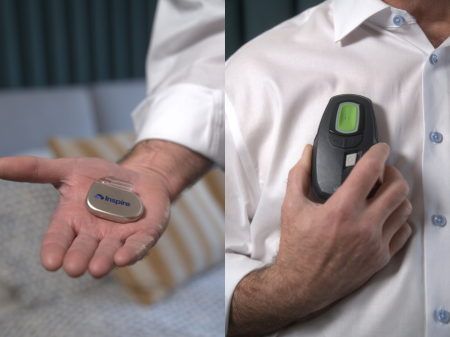
The Inspire device is a small implant placed under the skin that gently stimulates the nerve controlling tongue movement while a person is asleep. This helps prevent the tongue from blocking the airway, allowing the person to breathe more normally as they sleep.
It works by stimulating the hypoglossal nerve, which starts in the lower brainstem and travels through the neck to end in the muscles of the tongue.
Fully implanted and discreet, the device is controlled by the patient using a handheld remote before sleep. It then synchronises with the patient's natural breathing pattern to help keep the airway open throughout the night.