

Publish date: 3 August 2026
Dr Gail Dovey-Pearce, Head of Clinical Health Psychology reflects on her journey from completing her first triathlon to representing Team GB, and the lessons sport has brought to her role at Northumbria Healthcare
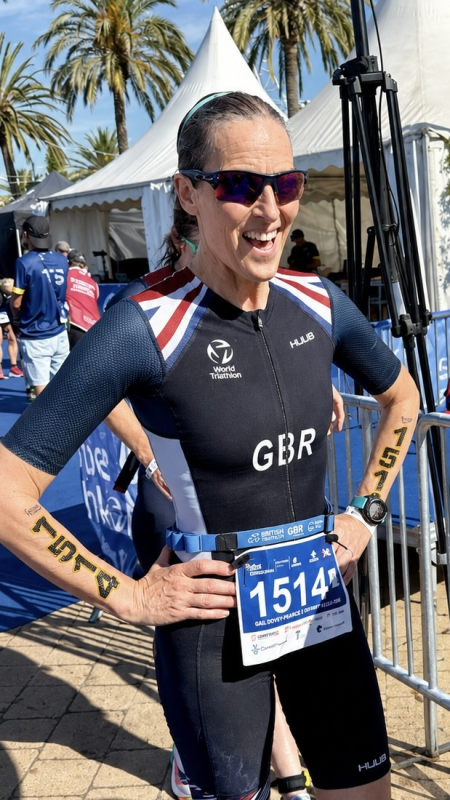
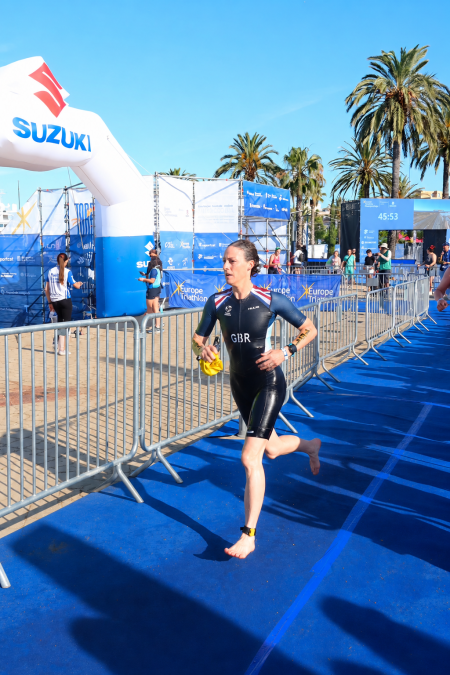
This summer, I raced in Spain for Team GB, in the Age Group European Sprint Triathlon Championships. I have recently qualified again, to represent Team GB in 2027, at the European Championships in Austria, and the World Championships in Germany. As someone from a single-parent, working-class family, with no formal sporting experience, I regularly find myself reflecting on the things that have got me here.
I did my first triathlon at Bamburgh, aged 40, encouraged by a colleague and friend. It gave me the motivation to train whilst balancing work and family life with two young sons. I swallowed a lot of the North Sea and crossing the finishing line was not a given. Having borrowed a wet-suit and a bike for that first race, what started as a personal challenge 14 years ago, has taught me lessons that I now draw on every day. I’ve also since treated myself to a new bike.
As well as vastly improving my swim-bike-run skills and teaching me the importance of steady and consistent progress over long arcs, perhaps the most important lessons triathlon has taught me are around psychological flexibility. In sport, healthcare, and everyday life, challenges are inevitable. Psychological flexibility helps us to stay connected to what matters in difficult and uncertain circumstances, and to respond in line with our values, with openness and curiosity, rather than fear, self-criticism or rigidity. By the time race day comes, and the training has been done, it is these psychological skills that I have to draw on most, to manage my Imposter Syndrome. It also keeps me going in the North East wind, rain and snow, training through the Winter months.
Four years ago, I literally ran into Malcolm Brown on the finish line at the Woodhorn Colliery race. He is a retired elite triathlon coach and former Olympic Performance Director for British Triathlon. We got talking and he explained he was interested in sharing his coaching insights with women who had to focus on work and caring responsibilities, and who now wanted to also explore their (often hidden) sporting ambitions. I cannot believe how lucky I have been to have learned the value of high(est) expertise coaching from him. I was scared at the prospect of calling myself a proper triathlete - and by the fear of failure - but I’m so pleased I had the courage to take him up on his generous offer.
More invaluable support has come from my fantastic family and friends. My friends do not see me at all during the Summer months, and my family support me in too many ways to mention but including putting up with me falling asleep during movie night and sometimes during dinner! Despite how it seems on the TV, triathlon is not an individual effort.
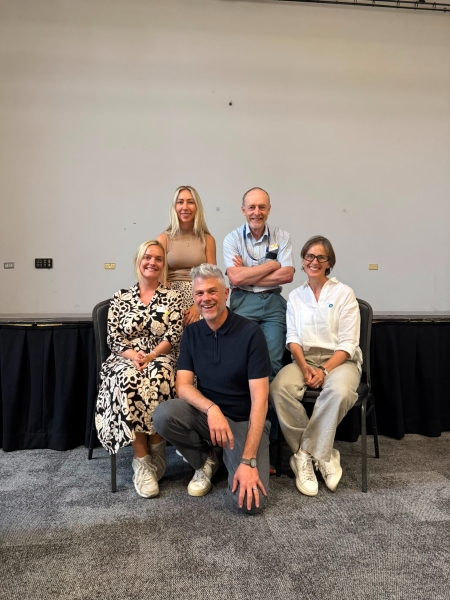
Persistent Physical Symptoms Research Team
I try to take these lessons into my work as Head of Service for Clinical Health Psychology, and with the Persistent Physical Symptoms Research Team. This team includes community members from Blyth, Ashington and Newbiggin, as co-production partners. We are all working together to examine the community health supports that people create for themselves and each other, in the places where they live. I have noticed the parallels with the belonging I feel within the community of triathlon. Good things happen when people feel psychologically enabled, trusted, able to express their views and values, and are safe to learn from setbacks and from each other.
Many women in the NHS are balancing professional roles alongside caring responsibilities, community commitments and personal ambitions. Creating cultures that value flexibility, authenticity and wellbeing, helps people to thrive, whatever their background, roles, or stage of life. My experiences have reinforced the importance of trusting in myself and others, of embracing challenge and change, and of building sustainable success through support, collaboration and cooperation.
The finish line may look different for each of us, but we all benefit from having a clear sense of purpose. What is important to me is not being held back as an older woman, continuing to push on with the hopes I have for myself, supporting others around me share what matters to them, and ideally not falling off my bike (again)!