

Smoking during pregnancy has huge risks for the health and development of your baby. Quitting smoking during pregnancy is the single most important thing you can do to protect your baby’s health.
All women receive carbon monoxide monitoring as routine practice at every antenatal appointment. If you are identified as a smoker, you will be referred onto a high-risk pathway of care where you will be cared for by a specialist midwife and reviewed by a consultant.
We can help you to quit smoking at any point in pregnancy, but the earlier you try, the lower the risk of complications to your baby. Your midwife will refer you to specialist stop smoking services who will support you to quit.
More information on help available can be found here.
Incentive scheme
We offer Love2Shop vouchers as an incentive to remain smokefree during pregnancy.
Vouchers are offered to all women who set a quit attempt and who remain quit throughout pregnancy, this is monitored by regular carbon monoxide testing.
For more information, speak to your midwife or Best Start in Life Advisor
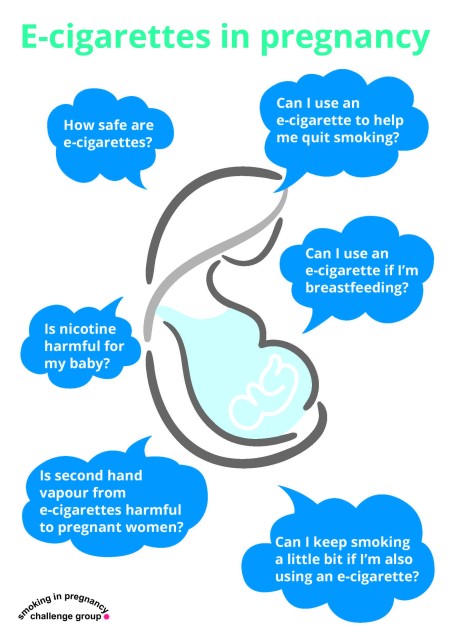
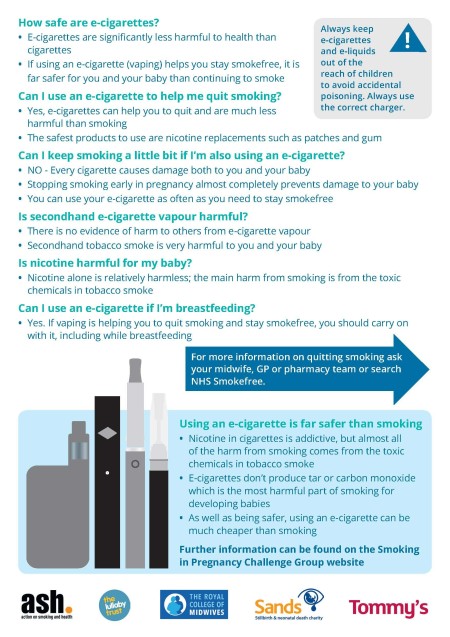
E-Cigarettes in pregnancy
Is it safe to drink alcohol when pregnant?
The Chief Medical Officers for the UK recommend that if you’re pregnant or planning to become pregnant, the safest approach is not to drink alcohol at all to keep risks to your baby to a minimum.
Drinking in pregnancy can lead to long-term harm to the baby, with the more you drink, the greater the risk.
Illegal drugs in pregnancy
Using illegal or street drugs during pregnancy, including cannabis, ecstasy, cocaine and heroin, can have a potentially serious effect on your unborn baby.
If you regularly use drugs, it’s important to tackle this now you’re pregnant.
It’s best not to stop abruptly without first seeking medical advice as there may be withdrawal problems or other side effects.
Getting help
If you use drugs or need help to stop drinking alcohol, it’s important to seek help straight away so you can get the right advice and support. Speak to your midwife who will ensure you receive the help you need with no judgement, just support.
For more information visit our alcohol and substance misuse during pregnancy page.
Useful links
Maintaining a healthy weight and continuing to exercise is very important during pregnancy and after birth. We can support you to stay healthy throughout pregnancy. Our Health Coaches and Health Trainers will work with you to provide an individualised plan for your wellbeing. Speak to your midwife for more information and to be referred.
Even small amounts of movement can make a really big difference to you and your baby’s health. Our physiotherapy team have recorded this video which is really helpful for anyone new to exercise or who wants to try some gentle activity:
There are some great tips, advice and videos on how to stay active on This Mum Moves. This is also available via the Baby Buddy App.
For foods to avoid and healthy eating advice during pregnancy, click here
Rise have worked with Northumbria NHS Foundation Trust to create this video to support women to walk whilst pregnant. Walking is a great form of activity to undertake when pregnant for almost all women because:
- It is safe for you and baby
- It can improve birth outcomes
- It is free
- You can fit it easily into your life both before and after birth
- It is a great social opportunity or a chance to catch up with friends
- It can support mental health and wellbeing
Please speak to your midwife if you have any concerns or for further advice around exercise during pregnancy
The Active Pregnancy Foundation website has a activity-based resources packed with advice and top tips to support you on your active journey through pregnancy and beyond. Click here to visit the website.
Your midwife will discuss your mental health history with you at the booking appointment and assess your wellbeing throughout your pregnancy.
If you have a history of mental ill health, you will be cared for by a consultant and specialist multi-disciplinary team.
We work with a number of services to support you depnding on your individual circumstances.
Healthy Start
What is Healthy Start?
If you’re more than 10 weeks pregnant or have a child under 4, you may be entitled to get help to buy healthy food and milk. You can also receive free vitamins for you and your baby.
If you’re eligible, you’ll be sent a Healthy Start card with money on it that you can use in lots of UK shops.
Find out more and if you are eligible: Get help to buy food and milk (Healthy Start)
Eating well
Eat Well, Spend Less Eat-well-Spend-less-food-fact-sheet.pdf (bda.uk.com)
General information on a healthy diet in pregnancy Have a healthy diet in pregnancy - NHS (www.nhs.uk)
Finance/bills
Citizens advice Get help with the cost of living - Citizens Advice
Cost of heating homes
For information on help with energy bills see here.
Local support services
If you live in Northumberland, Northumberland Frontline is a one-stop shop webpage with all available services in Northumberland: https:/
If you live in North Tyneside, information on local services is available here: https://
Safe sleeping
Keeping infants warm in colder homes may be raising concerns. This must be balanced with the risk of unsafe sleeping arrangements which include over wrapping.
The Lullaby Trust has new guidance on keeping babies warm and safe this winter, see here. This includes messages on what is not recommended.
We have a team of obstetric physiotherapists who work to keep you healthy and comfortable during your pregnancy and post-delivery. Below are some downloadable resources that you can access to guide you.
You can have both telephone or face-to-face consultations with a physiotherapist, so please ask your midwife to refer you.
We also have Fit for pregnancy classes running face to face at both Wansbeck General Hospital and North Tyneside General hospital. These classes are a great way to learn how your body changes during pregnancy (as these changes can contribute to aches and pains that you may experience), what it means to be physically active during pregnancy and ways to reduce discomfort.
Pregnancy resources
Pelvic floor
What is my pelvic floor? How do I do pelvic floor exercises? In this video, a Specialist Pelvic Health Physiotherapist explains how to get started on finding your pelvic floor muscles and why you should be exercising these muscles as part of your daily routine. Pelvic Health Physiotherapists help with pelvic floor dysfunction caused by pregnancy and childbirth, or other issues including incontinence and pelvic pain.
For more information please see this leaflet: The Pelvic Floor Muscles - a guide for women
Posture and position during pregnancy
For more information please see this leaflet: Fit for pregnancy
If you are experiencing back and/or pelvic girdle pain during your pregnancy, watch our videos here for advice.
We also have multiple episodes on physiotherapy as part of our Maternity @ Northumbria podcast. Listen here
Bladder and vaginal problems during and after pregnancy
For more information please see this leaflet: Pelvic organ prolapse
Constipation during and after pregnancy
For more information please see this leaflet: Improving your bowel function
Back/pelvic pain during pregnancy
For more information please the following leaflets:
Physical activity during pregnancy
If you are keen to remain/start being active during your pregnancy please see this resource: Active Pregnancy Foundation
We also have multiple episodes on physiotherapy as part of our Maternity @ Northumbria podcast. Listen here.
Benefits of physical activity during pregnancy to health and well-being
Preparing for labour
Perineal massage
Guided meditation with Lesley Beattie - Pelvic, Obstetric and Breast Health Physiotherapist
Breathing exercises demonstration with Lesley Beattie - Pelvic, Obstetric and Breast Health Physiotherapist
Guided meditation with Mel Corbo - - Pelvic, Obstetric and Breast Health Physiotherapist
Labour Positions with Mel Corbo - - Pelvic, Obstetric and Breast Health Physiotherapist
Post-birth resources
Bladder care
For more information please see the following leaflets:
Pain management and wound care
For more information please see the following leaflets:
Your core muscles after birth
For more information please see the following leaflets:
Return to exercise
For more information please see this leaflet: Fit for the future
It is also important to be physcially active post-birth.
Returning to running
Keen to get back to running post-birth? We have a video explaining how this is achieveable.
Self Assessment for DRA
A Diastasis of the Rectus Abdomins refers to thinning and widening of the linea alba (connective tissue in the middle of the abdominal wall between the rectus abdominis muscles) with associated laxity of the abdominal wall. It is often referred to as the “mummy tummy”. In this video, we explain how you can self-assess for a DRA